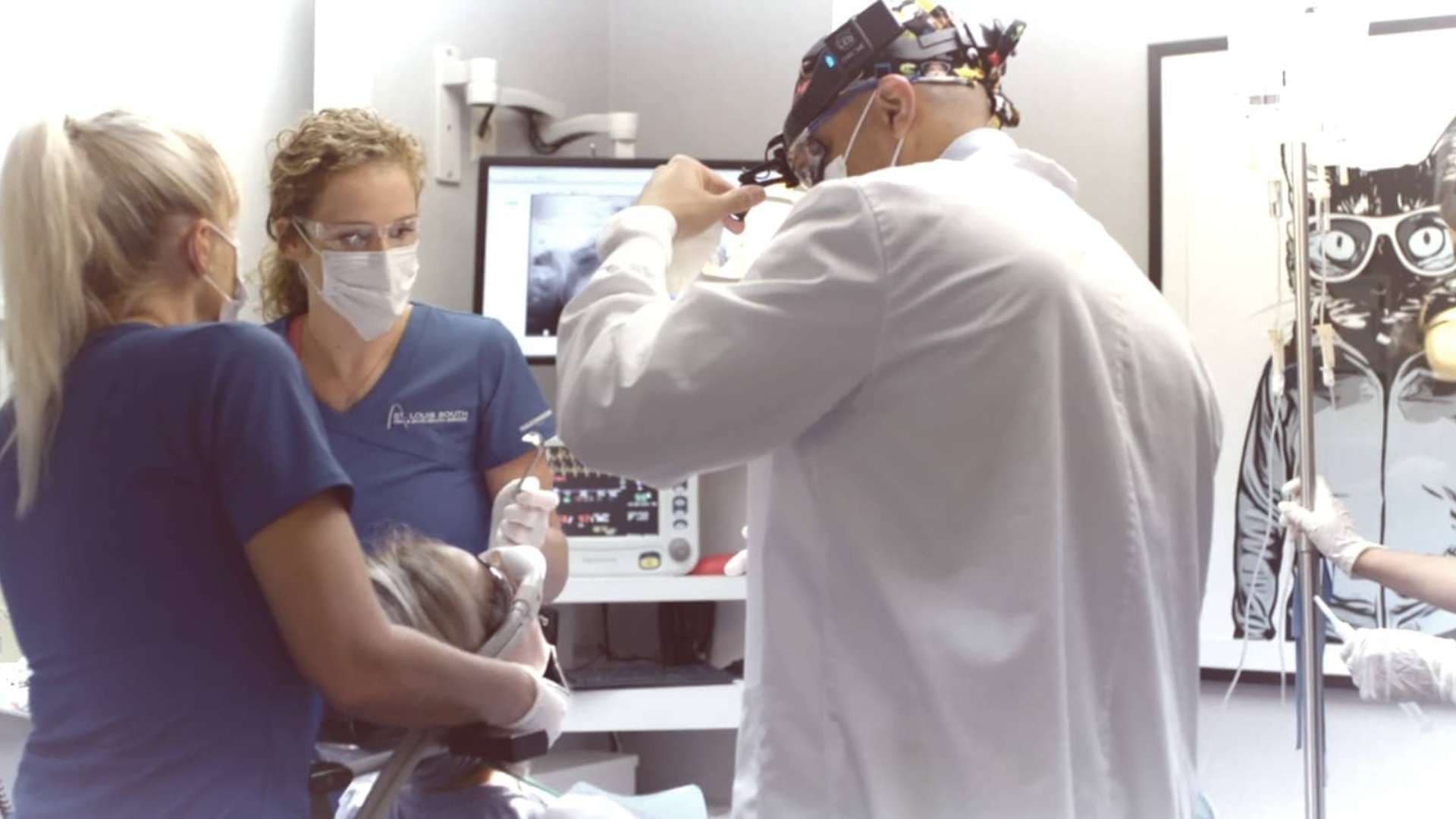
Sedation Safety
Sedation is chosen for the patient, not the schedule.
We discuss your medical history, your anxiety level, the complexity of the planned surgery, and your preferences before settling on a level.
Levels
Four sedation options, used as appropriate.
Local anesthesia only
Numb where the work happens. You stay fully awake. Used for short procedures and many extractions.
Nitrous oxide with local
A breathable mild anxiolytic. Wears off within minutes after. You can drive yourself home with a chaperone in some cases.
IV moderate sedation
A guided relaxed state through an IV. You may not remember much of the procedure. A responsible adult drives you home.
IV deep sedation or full sleep state
For longer or more complex surgeries. Continuous monitoring throughout. Used in full arch and complex bone graft cases.
How we keep sedation safe
- Pre-operative medical questionnaire and physical review
- Continuous vital sign monitoring during sedation
- Trained sedation assistant in addition to the surgical team
- Emergency medications and airway equipment on hand
- Clear pre-op fasting and medication instructions provided in writing
- Recovery monitoring before discharge
Sedation has risks. We discuss the relevant risks for your case and your medical history before scheduling. Patients with significant cardiac, pulmonary, or airway concerns may be evaluated for hospital-based care when appropriate.